Master the STAR Method: Your Secret Weapon for Behavioral Interviews | SpectraSeek
Learn how to structure your answers using the STAR method and impress interviewers at top companies like Google, Amazon, and TCS. This comprehensive guide includes real examples and practice exercises.
Ananya Krishnan
Career Coach

You're sitting in the interview room. The recruiter looks up from your resume and says, "Tell me about a time when you faced a challenging situation and how you handled it." Your mind goes blank. Sound familiar?

If you've ever fumbled through a behavioral interview question, you're not alone. According to LinkedIn's Global Talent Trends report, 92% of recruiters say soft skills matter as much as—or more than—hard skills. Yet most students spend 90% of their prep time on technical skills and almost none on mastering behavioral interviews.
That's where the STAR method comes in—a proven framework that transforms rambling, unfocused answers into compelling stories that showcase your potential. Whether you're preparing for campus placements at TCS, Infosys, Wipro, or dreaming of landing a role at Google or Amazon, this technique is your secret weapon.
What is the STAR Method?
STAR is an acronym that stands for Situation, Task, Action, and Result. It's a structured approach to answering behavioral interview questions—those that typically begin with phrases like "Tell me about a time when..." or "Give me an example of..."
Think of STAR as your storytelling blueprint. Instead of giving vague, meandering answers, you deliver a clear narrative with a beginning, middle, and end. Interviewers love this because it gives them concrete evidence of your capabilities rather than just claims.
The STAR Framework Breakdown
| Component | What It Means | Time Allocation |
|---|---|---|
| Situation | Set the context and background for your story | 15-20% |
| Task | Explain your specific responsibility and the challenge you faced | 10-15% |
| Action | Detail the specific steps YOU took (not the team) | 50-60% |
| Result | Share the outcomes, metrics, and lessons learned | 15-20% |
Breaking Down Each STAR Component
S – Situation: Set the Stage
The Situation is your opening act. Provide enough context for the interviewer to understand the scenario without drowning them in unnecessary details. Include where you were (college project, internship, part-time job), when it happened, who was involved (team size, your position), and what the broader context was.
"Keep the Situation to 2-3 sentences (about 15-20% of your total answer). Interviewers want to hear about your actions, not a detailed backstory."
T – Task: Define Your Challenge
The Task explains your specific responsibility within that situation. This is where you highlight what was expected of you and what challenge you needed to overcome. Answer: What was your role? What goal did you need to achieve? What constraints did you face? Why was this task important?
A – Action: Show Your Process
This is the heart of your answer—where you demonstrate your skills, decision-making, and initiative. Spend about 50-60% of your answer here. Include a step-by-step breakdown of what YOU did, why you chose that approach, how you overcame obstacles, and the skills you applied.
Critical mistake to avoid: Don't say "we did this" or "the team decided." Use "I" statements to show YOUR contribution. Interviewers are hiring you, not your team.
R – Result: Prove Your Impact
End strong with the outcome. Quantify whenever possible—numbers make your achievements tangible and memorable. Include metrics ("improved efficiency by 30%", "saved 10 hours weekly"), recognition received, lessons learned, and long-term impact.
Don't have metrics? That's okay! You can still describe qualitative outcomes: "The client expressed satisfaction," "Our approach was adopted by other teams," or "I was asked to lead similar projects afterward."
Real STAR Examples for Campus Placements
Let's see the STAR method in action with examples tailored for freshers and students facing campus placements.
Example 1: Leadership & Teamwork
Question: "Tell me about a time when you led a team through a difficult project."
STAR Response Example: Leadership
| Component | Response |
|---|---|
| Situation | During my final year, our software engineering course required a capstone project. Our 5-member team was assigned to build an inventory management system for a local retail store. |
| Task | As the team lead, I was responsible for coordinating development, ensuring we met our 8-week deadline, and presenting to external stakeholders. The challenge intensified when two team members had conflicting approaches to the database design, causing a week-long delay. |
| Action | I organized a structured discussion where each member presented their approach with pros and cons. I facilitated a hybrid solution incorporating the best elements of both designs. I implemented daily 15-minute stand-up meetings, created a shared Trello board for tracking progress, and volunteered to handle additional API development work when we fell behind. |
| Result | We delivered the project 3 days ahead of schedule. The client adopted our system, reporting a 40% reduction in manual inventory tracking time. Our team received an A+ grade, and the professor cited our project as an example for future batches. |
Example 2: Problem-Solving Under Pressure
Question: "Describe a situation where you had to solve a complex problem quickly."
Situation: During my internship at a fintech startup, our payment processing system crashed during a high-traffic sale event. I was the only developer available, and the senior engineers were in a meeting with investors.
Task: I needed to identify and fix the issue within 30 minutes to prevent significant revenue loss and customer complaints.
Action: I immediately checked the server logs and identified a memory leak causing the crash. Rather than waiting for approval, I made a judgment call to restart the service with increased memory allocation as a temporary fix. Simultaneously, I documented the root cause and drafted a permanent fix. I then sent a concise update to the team chat explaining the situation, the temporary fix, and my proposed permanent solution.
Result: The system was back online in 18 minutes—well under the 30-minute target. The permanent fix I proposed was implemented the following week. My supervisor commended my initiative and calm under pressure.
Company-Specific STAR Strategies
Different companies evaluate candidates differently. Here's how to adapt your STAR responses for major recruiters visiting your campus:
Adapting STAR for Different Companies
| Company | What They Value | STAR Emphasis |
|---|---|---|
| Amazon | Customer obsession, ownership, bias for action | Quantifiable results, customer impact, fast decision-making |
| Innovation, collaboration, scalable thinking | Creative problem-solving, data-driven decisions, teamwork | |
| TCS | Learning agility, teamwork, client focus | Adaptability, collaboration across teams, professional growth |
| Infosys | Integrity, client value, excellence | Ethical decisions, client satisfaction, continuous improvement |
| Wipro | Spirit of Wipro values, innovation | Team spirit, social responsibility, creative solutions |
| Deloitte | Integrity, outstanding value, collaboration | Professional judgment, stakeholder management, teamwork |
Most Common Behavioral Questions to Practice
These questions appear in 80% of campus placement interviews. Prepare STAR responses for each:
Top 10 Behavioral Interview Questions
Tell me about a time you worked effectively under pressure.
Describe a situation where you had to work with a difficult team member.
Give an example of when you showed initiative.
Tell me about a time you made a mistake and how you handled it.
Describe a project you're particularly proud of.
Tell me about a time you had to learn something new quickly.
Give an example of how you've handled a conflict.
Describe a situation where you had to persuade someone.
Tell me about a time you went above and beyond.
Describe how you prioritize when you have multiple deadlines.
5 Common STAR Method Mistakes to Avoid
1. Being Too Vague: Instead of "I helped improve the project," say "I identified a bottleneck in our data processing pipeline and implemented a caching solution that reduced load time by 45%."
2. Focusing Too Much on 'We': Interviewers want to know YOUR contribution. While acknowledging teamwork is good, ensure your individual actions are clear.
3. Skipping the Result: Many candidates describe their actions but forget to share the outcome. Always quantify your impact when possible.
4. Choosing the Wrong Example: Don't pick examples where you played a minimal role. Choose stories that showcase growth and positive impact.
5. Making It Too Long: Your STAR response should be 90 seconds to 2 minutes. Practice timing yourself. If it's over 2 minutes, you're including unnecessary details.
How to Practice STAR Effectively
Knowing the STAR method is one thing. Mastering it through practice is another. Studies show that candidates who practice with realistic interview simulations are 3x more likely to receive job offers.
Create a STAR Story Bank: Write 5-7 stories that can be adapted for different questions. Include examples from academics, internships, extracurriculars, and personal projects.
Practice Out Loud: Reading your answers silently is not enough. Record yourself and review for clarity, pace, and confidence.
Use AI Mock Interviews: Platforms like SpectraSeek offer AI-powered mock interviews that provide instant feedback on your STAR responses, helping you identify areas for improvement in content, delivery, and body language.
Time Your Responses: Aim for 90-120 seconds per answer. Use a timer during practice to ensure concise, impactful delivery.
Key Takeaways
- STAR (Situation, Task, Action, Result) provides a clear structure for behavioral interview answers
- Focus 50-60% of your answer on the Action section—this is where you showcase your skills
- Always quantify results when possible; numbers make your impact memorable
- Prepare 5-7 versatile stories that can be adapted for different questions
- Adapt your stories to match each company's values and culture
- Practice out loud and time yourself to ensure 90-120 second delivery
Ready to Master the STAR Method?
Practice with AI-powered mock interviews and get instant feedback on your STAR responses. SpectraSeek's interview coaching analyzes your content, delivery, and body language to help you become truly interview-ready.
Start Practicing Free →See also
The Interview Readiness Gap: A Simple Framework for TPOs · The 2026 Placement Season Is Here. But Are Students Ready? · How to Make Your Resume ATS-Friendly: A Complete Guide for 2025
Tags
Related Posts
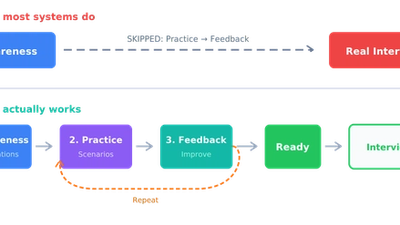
The Interview Readiness Gap: A Simple Framework for TPOs
Why most placement preparation programs fail—and how to fix them. A data-driven framework showing why students who complete 10+ mock interviews are 3x more likely to succeed, and how TPOs can audit and close the Practice + Feedback gap at scale.
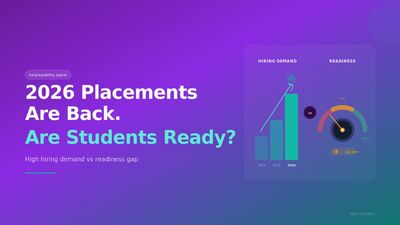
The 2026 Placement Season Is Here. But Are Students Ready?
With only 42.6% of Indian graduates employable and youth unemployment near 40%, the 2026 campus placement season exposes a critical preparation gap. Here's what the data reveals and what students, universities, and placement cells need to know.
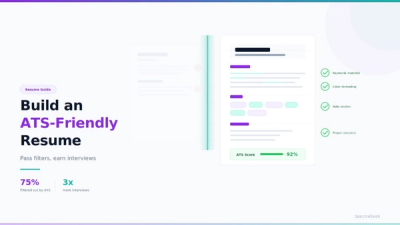
How to Make Your Resume ATS-Friendly: A Complete Guide for 2025
Learn how to optimize your resume for Applicant Tracking Systems. This comprehensive guide covers formatting, keywords, common mistakes, and testing strategies to help you get past the bots and land more interviews.